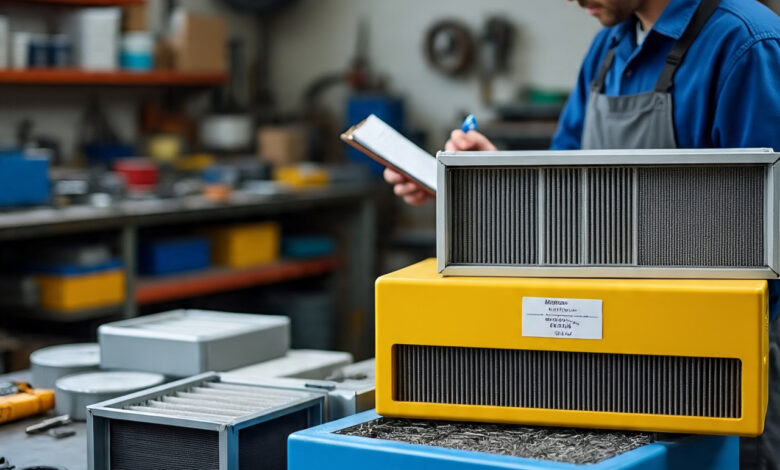
Choosing the right filtration system can determine how well a powder coating booth performs over its lifetime. In modern finishing operations, efficiency and cleanliness go hand in hand with productivity. Understanding what makes one filtration module better suited than another can help prevent costly mistakes before installation.
Filter Media Type Aligned with Particulate Size and Material Reuse
Filter media varies in composition and purpose. In a powder coating spray booth, the choice between cellulose, polyester, or nanofiber filters depends on the size of the powder particles and whether the coating material will be reclaimed. Polyester filters, for example, offer better cleaning properties for reusable materials, while cellulose may be suitable for single-use systems.
Different filter fibers also influence static buildup and airflow consistency. For facilities reclaiming fine powders, electrostatic-dissipative coatings prevent clogging and uneven powder distribution. Selecting a media that matches particle behavior ensures consistent finish quality and reduces the strain on downstream powder coating equipment.
Air-flow Resistance Curves and Pressure Drop Across the Module
Every filtration module has a unique airflow resistance curve that shows how much pressure it creates as air passes through. A high pressure drop means the fan works harder to maintain adequate air volume. Over time, that extra energy use increases operational costs and shortens filter life.
Technicians often compare these curves to match booth design requirements. In a high-production environment, even minor differences in static pressure affect overspray capture efficiency. A well-balanced air system improves coating uniformity while minimizing filter wear, making this factor essential before finalizing a new powder coating booth purchase.
Capture Efficiency Percentage Suited to Recovery vs. Exhaust Setups
Filtration efficiency describes how effectively a module captures powder particles. Systems designed for recovery must reach higher efficiency ratings—often above 98%—to ensure minimal material loss. Exhaust-only setups, on the other hand, focus on maintaining air purity rather than reclaiming product.
Understanding this distinction helps avoid misapplication of filters meant for different purposes. Using a recovery filter in an exhaust line could overload the system or raise back pressure unnecessarily. Comparing efficiency values ensures both environmental compliance and cost savings across the entire paint or powder coating operation.
Modularity of Filter Banks Enabling Future Capacity Upgrades
A modular filter bank design allows facilities to expand or adjust capacity without replacing the entire booth. This flexibility benefits operations expecting growth or changes in production output. Additional modules can be integrated with existing housing, maintaining consistent performance as airflow demands increase.
Manufacturers of industrial paint booth systems often recommend modular configurations for scalability. With replaceable filter sections and standardized frames, maintenance becomes simpler and expansion more affordable. It’s a design consideration that supports long-term adaptability rather than locking facilities into a fixed system size.
Seal Integrity and Bypass Minimization Through Filter Frame Design
A filter is only as effective as its seal. Any air bypass through gaps or weak edges allows unfiltered particles to circulate back into the workspace. High-quality frames with uniform compression seals prevent leaks under varying pressure conditions, preserving consistent airflow through the media.
In powder coating booths where even minor contamination affects finish quality, sealing performance cannot be ignored. Filters featuring double-gasket systems or precision-fit frames reduce maintenance frequency and keep the air path fully controlled. Checking the frame design during the comparison process helps ensure long-term efficiency and cleaner operation.
Read more: Developing Custom iOS Mobile Apps: Tools & Best Practices
Maintenance Interval Predictions Based on Cartridge or Bag Filter Life
Knowing how long a filter can operate before cleaning or replacement directly affects downtime planning. Cartridge filters generally have longer service intervals than bag filters because of their higher surface area and ease of pulse-cleaning. However, their performance can vary depending on dust load and airflow rates.
Predictive maintenance data supplied by manufacturers can guide purchasing decisions. For example, in continuous production environments, filters designed for extended cleaning cycles lower operating costs and reduce interruptions. Comparing service intervals helps determine which modules provide the best balance between filtration quality and maintenance effort in a powder coating booth.
Compatibility with Color-change Operations to Reduce Cross-contamination
Frequent color changes require filters that prevent residual powder from contaminating new batches. Smooth interior surfaces, quick-release latching systems, and non-stick coatings all reduce leftover material during changeovers. This feature becomes vital for facilities running short production runs with multiple finishes per day.
Quick-change filter systems also enhance production agility. Operators can swap filters in minutes, maintaining consistent color accuracy and preventing costly rework. When evaluating new powder coating equipment, compatibility with color-change operations adds measurable value for businesses focused on versatility and fast turnaround.
Comparing filtration modules before investing in a new powder coating booth involves more than checking price or dimensions—it requires a full understanding of performance characteristics, energy demands, and long-term maintenance factors. Each aspect, from airflow behavior to sealing integrity, determines how efficiently a booth captures and recycles powder. For manufacturing teams focused on productivity and clean, repeatable results, Reliant Finishing Systems can assist with properly matched filtration solutions built for lasting reliability.
if you want to know more about High-Power Audio Amplifier then visit our Tech category.
For facilities aiming to maintain efficiency and cleanliness, understanding what makes one filtration module better suited than another can help prevent costly mistakes, just like finding balance strategies for reducing alcohol consumption in a social setting.
For facilities reclaiming fine powders, electrostatic-dissipative coatings prevent clogging and uneven powder distribution. Learn more about different filter fibers.
For facilities reclaiming fine powders, electrostatic-dissipative coatings prevent clogging and uneven powder distribution. This is similar to keeping the exterior of a car clean to maintain its appearance.